
Nut bolts are among the most widely used fastening components in mechanical, construction, automotive, furniture, and industrial applications.
A nut bolt assembly generally consists of a threaded bolt and a matching nut that work together to hold two or more components securely. Understanding nut bolt threads, materials, sizes, and fittings helps users select appropriate fasteners for different applications.
Nut bolt specifications can vary according to thread design, diameter, length, material, strength grade, and dimensional standards. Learning these basics makes it easier to understand technical drawings, product specifications, maintenance requirements, and general mechanical assembly practices.
Context
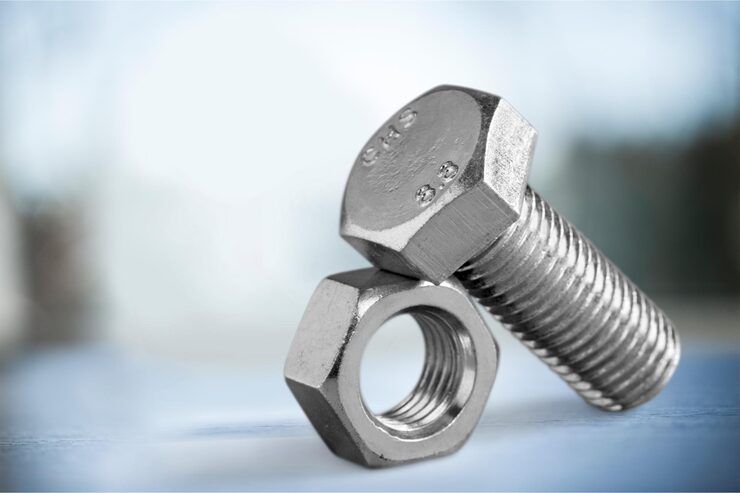
A nut bolt is a mechanical fastening arrangement used to join components through a threaded connection. The bolt normally has a head and a threaded shaft, while the nut contains an internal thread designed to match the bolt's external thread. When the nut is tightened onto the bolt, the joined components are held together by clamping force.
Threads are the spiral ridges formed around the bolt shaft or inside the nut. They allow rotational movement to be converted into axial clamping force. Different thread profiles and dimensions are used depending on the intended application and applicable engineering standard.
Common thread characteristics include:
- Thread diameter
- Thread pitch
- Thread angle
- Thread direction
- Thread length
- Number of threads per unit length
Most conventional nut bolts use right-hand threads, meaning the nut tightens when rotated clockwise when viewed from the appropriate end. Left-hand threads are also available for applications where rotation could otherwise loosen a conventional connection.
Nut bolts are manufactured from materials such as carbon steel, alloy steel, stainless steel, brass, and other engineering materials. Material selection depends on mechanical strength, corrosion resistance, temperature conditions, and the surrounding environment.
Importance
Nut bolt selection matters because a fastening connection must withstand the forces and conditions expected during operation. An unsuitable fastener can result in loosening, deformation, thread damage, corrosion, or joint failure.
The important characteristics to consider include:
- Bolt diameter and length
- Thread type and pitch
- Material composition
- Strength or property class
- Corrosion resistance
- Head configuration
- Nut compatibility
- Washer requirements
- Operating temperature
- Expected mechanical loads
In structural and industrial applications, engineers may specify particular grades and standards rather than selecting a fastener based only on appearance. Strength classifications provide information about mechanical properties such as tensile strength and yield strength.
Stainless steel nut bolts are commonly considered where corrosion resistance is important. Carbon and alloy steel fasteners are frequently used where mechanical strength is a major consideration. However, the appropriate material depends on the complete application rather than material name alone.
| Feature | What It Describes | Why It Matters |
|---|---|---|
| Diameter | Width of the threaded portion | Determines dimensional compatibility |
| Length | Overall or specified bolt length | Affects joint engagement |
| Pitch | Distance between adjacent threads | Determines thread compatibility |
| Material | Composition of the fastener | Influences strength and corrosion behavior |
| Grade | Mechanical property classification | Helps identify performance characteristics |
| Head Type | Shape of the bolt head | Determines the appropriate tool |
| Nut Type | Configuration of the matching nut | Affects fastening arrangement |
Correct tightening is also important. Excessive tightening can stretch or damage a fastener, while insufficient tightening may allow movement or loosening. Torque specifications should therefore be followed when they are provided by an engineer, manufacturer, or applicable technical standard.
Recent Updates
Modern fastening technology continues to develop alongside advances in manufacturing, construction, transportation, renewable energy, and industrial equipment. One important trend is the increased use of corrosion-resistant materials and protective surface treatments for demanding environments.
Digital engineering has also changed how fasteners are specified. Computer-aided design systems can include standardized bolt and nut dimensions within three-dimensional assemblies. This helps engineers check thread compatibility, clearance, length, and component positioning before physical assembly.
Another development is greater attention to traceability and quality control. Industrial applications may require documented material characteristics, dimensional inspection, mechanical testing, and identification markings.
Fastener standards are also periodically reviewed and updated by standards organizations. Specifications can change regarding dimensions, mechanical properties, testing procedures, marking, and terminology. Engineers and technicians should therefore verify the edition of a standard referenced in a particular project.
Common developments include:
- Greater use of corrosion-resistant alloys
- Improved surface protection methods
- Digital fastener libraries for engineering software
- Automated dimensional inspection
- Better traceability of industrial fasteners
- Increased emphasis on standardized specifications
Sustainability considerations are also becoming more relevant. Longer-lasting fastening components can reduce maintenance requirements and material replacement in appropriate applications. However, environmental performance should be evaluated together with strength, durability, manufacturing processes, and application requirements.
Laws or Policies
Nut bolts are generally governed through technical standards, engineering specifications, workplace safety requirements, and sector-specific regulations rather than one universal law.
International and national standards can define dimensions, tolerances, thread forms, mechanical properties, testing methods, and marking requirements. Examples include standards developed by organizations such as ISO, ASTM International, ASME, DIN, and national standards bodies.
In India, the Bureau of Indian Standards (BIS) publishes Indian Standards covering various fasteners and mechanical components. Depending on the application, Indian Standards may address dimensions, materials, grades, testing, and other technical characteristics.
For structural, pressure-related, automotive, railway, aerospace, or other regulated applications, additional technical requirements may apply. The relevant engineering specification should always be checked before selecting or installing a fastener.
Workplace safety rules can also influence fastening activities. Workers handling mechanical assemblies should follow applicable safety procedures, use suitable tools, and observe specified torque or installation requirements.
A few important considerations are:
- Check the applicable national or international standard.
- Confirm the required mechanical grade.
- Verify thread dimensions and compatibility.
- Follow engineering drawings and technical specifications.
- Use specified tightening procedures.
- Consider environmental and corrosion conditions.
Standards can differ between regions and applications, so a metric designation should not automatically be treated as interchangeable with an imperial designation.
Tools and Resources
Several technical resources can help users understand nut bolts and make accurate dimensional comparisons. Engineering handbooks and standards documents provide detailed information about thread geometry, fastener grades, tolerances, and dimensions.
Useful resources include:
- ISO standards for international fastener specifications
- BIS standards for applicable Indian requirements
- ASTM standards for materials and mechanical testing
- ASME publications for relevant engineering applications
- Engineering fastener tables for dimensions and thread data
- Torque reference charts for specified fastener assemblies
- CAD libraries containing standardized fastener models
- Thread identification gauges for physical inspection
Thread calculators can help determine relationships between diameter, pitch, and thread dimensions. However, calculator results should be checked against the applicable standard when precision is important.
When identifying an existing nut bolt, measurements should be taken carefully. A thread pitch gauge can help identify the distance between threads, while calipers can be used to measure diameter and length. Visual inspection alone is often insufficient because fasteners with similar appearances can have different dimensions or grades.
FAQs
What is a nut bolt?
A nut bolt is a threaded mechanical fastening arrangement consisting primarily of a bolt and a compatible nut. The threaded connection creates clamping force that holds components together.
What are the main types of nut bolt threads?
Common thread categories include metric threads and inch-based threads. Threads can also differ by pitch, profile, diameter, and direction. The nut and bolt must have compatible thread specifications.
How are nut bolt sizes identified?
Sizes are commonly identified using measurements such as nominal diameter, thread pitch, and length. Metric fasteners are often specified in millimeters, while inch-based systems commonly use inches and threads per inch.
Which materials are used for nut bolts?
Common materials include carbon steel, alloy steel, stainless steel, and brass. The appropriate material depends on strength requirements, corrosion exposure, temperature, and the characteristics of the application.
Why are washers sometimes used with nut bolts?
Washers can distribute the load over a larger surface area, protect mating surfaces, and support particular joint designs. Their use depends on the engineering requirements of the connection.
Conclusion
Nut bolts are fundamental mechanical fasteners used across many industries and everyday applications. Understanding threads, materials, sizes, grades, and fitting requirements helps users identify compatible components and understand basic fastening principles.
Correct selection should be based on technical specifications, environmental conditions, mechanical requirements, and applicable standards. For critical assemblies, engineering documentation and relevant standards should take priority over visual identification or assumptions.