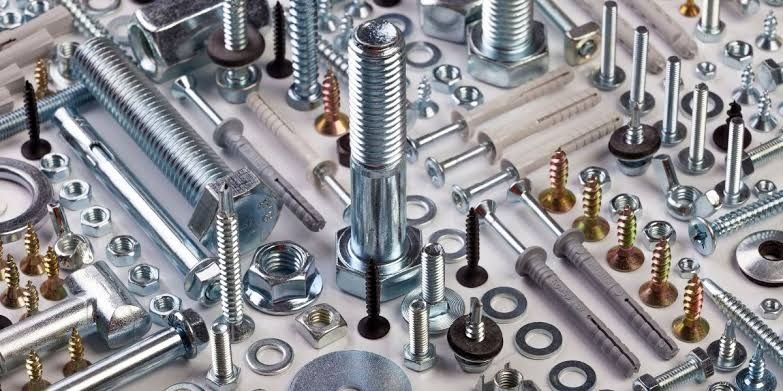
Fasteners are hardware components used to join, secure, or position two or more parts. Common examples include bolts, screws, nuts, washers, rivets, and threaded studs.
Understanding fastener types, materials, thread patterns, and basic functions helps explain how structures, machines, furniture, vehicles, and everyday products are assembled.
The selection of a fastener depends on factors such as the materials being joined, expected loads, environmental conditions, access for installation, and whether the joint needs to be permanent or removable. Basic fastener knowledge is useful for students, technicians, engineers, manufacturers, maintenance personnel, and general readers.
Context
Fasteners have been used for centuries, although modern threaded fasteners developed significantly during the industrial era. Standardized threads and dimensions made it easier to produce compatible components and maintain mechanical assemblies.
A fastener generally creates a mechanical connection between parts. Some fasteners use threads, while others depend on deformation, friction, or a combination of mechanical features.
Common fastener categories include:
- Bolts and nuts for clamping components together
- Screws for creating threaded or partially threaded connections
- Washers for distributing loads and protecting surfaces
- Rivets for permanent mechanical joints
- Studs for applications where threaded engagement is needed at both ends
Common Fastener Types
| Fastener | Basic Function | Typical Applications |
|---|---|---|
| Bolt | Clamps parts together with a nut or threaded hole | Machinery, structures |
| Screw | Creates a threaded connection | Furniture, equipment, assemblies |
| Nut | Engages with a bolt or threaded stud | Mechanical assemblies |
| Washer | Distributes load and protects surfaces | Bolted joints |
| Rivet | Forms a permanent joint | Sheet metal, aerospace |
| Stud | Provides fixed external threads | Engines, flanges |
| Threaded insert | Adds threads to a material | Plastics, composites |
Fasteners may also be classified according to their head shape, drive type, thread profile, material, strength grade, and surface treatment.
Importance
Fasteners play an important role in mechanical stability and structural integrity. A properly selected fastener can help maintain clamping force, control movement, and keep connected components aligned during normal operation.
The importance of fasteners extends across many industries. Construction uses bolts and anchors in structural connections, automotive manufacturing uses numerous threaded components, and electronics may use small screws and specialized fastening hardware.
Fastener selection can be influenced by:
- Applied tensile, shear, or bending loads
- Material compatibility
- Temperature and environmental exposure
- Required joint strength
- Vibration and repeated loading
- Installation space
- Need for future disassembly
Incorrect selection can contribute to loose joints, damaged threads, corrosion, deformation, or premature mechanical failure. For this reason, engineering specifications and manufacturer documentation are often used when a fastening system has safety-critical requirements.
Recent Updates
Recent developments in fastening technology increasingly focus on material efficiency, corrosion resistance, dimensional consistency, and automated assembly. Modern manufacturing environments also use digital inspection systems to verify dimensions, thread quality, and installation results.
High-strength alloy steels, stainless steels, aluminum alloys, and engineered materials are used for different applications. Surface treatments such as zinc-based coatings and specialized finishes can improve corrosion resistance or alter surface characteristics.
Automation has also changed how fasteners are installed. Assembly systems can monitor variables such as torque, angle, rotational speed, and installation sequence. These measurements can help identify abnormal fastening conditions during production.
Another development is the increased use of standardized digital product information. Technical drawings, digital catalogs, computer-aided design data, and electronic specifications make it easier to identify dimensions, thread standards, and material grades.
Sustainability considerations are also influencing fastener design. Engineers may evaluate material usage, durability, recyclability, and the compatibility of fasteners with the materials they connect.
Laws or Policies
Fasteners can be affected by technical standards, building regulations, transportation requirements, workplace rules, and material restrictions. The exact requirements depend on the application, location, and industry.
In the United States, organizations such as ASTM International and SAE International publish standards covering materials, dimensions, mechanical properties, and testing methods for various fasteners. ISO standards are widely used internationally for dimensions, threads, grades, and related specifications.
In India, the Bureau of Indian Standards develops and publishes Indian Standards covering many engineering products and practices. Relevant requirements can vary depending on the fastener and its intended application.
For structural or safety-related applications, engineers and organizations should consult the applicable regulations and standards rather than relying only on general fastener descriptions.
Environmental regulations may also affect coatings and chemical treatments used on fastening components. Requirements can vary by jurisdiction and product category, so current regulatory documentation should be checked for specific applications.
Tools and Resources
Several resources can help readers understand fasteners and identify suitable specifications. Useful resources include standards organizations, engineering references, technical drawings, thread charts, and manufacturer documentation.
Commonly used resources include:
- ISO standards for international dimensions and thread specifications
- ASTM standards for material and performance requirements
- SAE publications for automotive and mechanical applications
- Bureau of Indian Standards resources for Indian Standards
- Thread identification charts for diameter and pitch information
- Engineering calculators for load and torque-related calculations
- CAD libraries for standardized fastener dimensions
A thread identification chart can help distinguish metric threads from inch-based systems. For example, metric fasteners are commonly identified by nominal diameter and pitch, while inch-based threads may be specified using diameter and threads per inch.
Fastener markings can also provide information about grade or material characteristics. However, markings vary by standard and product type, so they should be interpreted using the applicable technical specification.
FAQs
What are the main types of fasteners?
Common fasteners include bolts, screws, nuts, washers, rivets, studs, and threaded inserts. Each type is designed for particular joining conditions and installation methods.
What is the difference between a bolt and a screw?
A bolt is commonly used with a nut or a threaded component to clamp parts together. A screw generally engages directly with a threaded hole or forms its own thread in certain materials.
Why are washers used with fasteners?
Washers can distribute clamping loads over a larger surface area, protect the connected material, and help address specific joint requirements. Different washer designs have different functions.
What materials are used to make fasteners?
Common materials include carbon steel, alloy steel, stainless steel, aluminum, brass, and specialized alloys. Material selection depends on strength, corrosion resistance, temperature, weight, and application requirements.
What is fastener thread pitch?
Thread pitch is the distance between corresponding points on adjacent threads in a metric thread. It is an important dimension used to identify and match threaded components.
Conclusion
Fasteners are fundamental mechanical components that provide reliable connections between parts. Understanding their types, materials, threads, and basic functions helps explain how many everyday products, machines, structures, and industrial assemblies are constructed.
Proper fastener selection depends on the joint design, materials, loads, environment, and applicable technical standards. For specialized or safety-critical applications, relevant engineering specifications should always be consulted.