Rubber processing machines are industrial systems used to prepare, mix, shape, cure, and finish natural or synthetic rubber.
They help transform rubber compounds and other ingredients into forms suitable for products such as seals, hoses, belts, tires, rollers, sheets, and molded components.
Learning rubber processing machine basics involves understanding the different machine types, operating principles, material flow, temperature control, pressure, mixing, and curing. This knowledge is useful for students, technicians, engineers, production planners, and anyone studying rubber manufacturing processes.
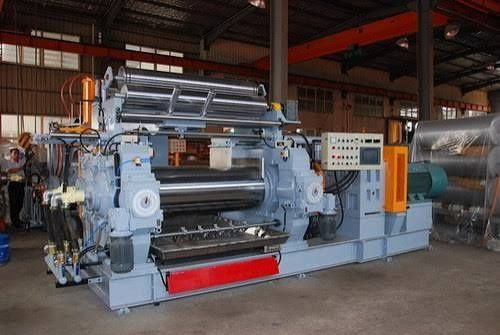
Context – What Is a Rubber Processing Machine?
A rubber processing machine is equipment designed to change raw or compounded rubber into a usable intermediate material or finished component. Rubber processing can involve several stages because rubber normally needs controlled mixing, heating, shaping, and vulcanization before it reaches its required physical properties.
Common equipment includes:
| Machine type | Main function | Typical process |
|---|---|---|
| Rubber mixing mill | Blends rubber and additives | Mixing and mastication |
| Internal mixer | Intensive compound mixing | Batch mixing |
| Rubber extruder | Produces continuous profiles | Extrusion |
| Rubber calender | Forms sheets or coated materials | Calendering |
| Compression molding machine | Forms molded components | Compression molding |
| Injection molding machine | Injects compound into molds | Injection molding |
| Vulcanizing press | Cures shaped rubber | Vulcanization |
| Rubber grinder | Reduces rubber into smaller particles | Grinding |
The operating principle depends on the machine. A mixing mill uses rotating rolls to work the rubber compound, while an internal mixer applies mechanical shear inside a closed chamber. Extruders use a rotating screw to move and shape the compound through a die.
Vulcanization is another important stage. During this process, heat and pressure help create cross-links within the rubber structure. The resulting material generally has different strength, elasticity, hardness, and resistance characteristics from the uncured compound.
Importance – Why Rubber Processing Machines Matter
Rubber processing machinery is important because consistent processing conditions can influence the quality and performance of rubber products. Factors such as temperature, mixing time, pressure, compound formulation, screw speed, roll speed, and curing time can affect the final material.
The equipment also supports different production requirements. A laboratory may use smaller equipment for formulation development, while industrial facilities may use continuous extrusion, automated mixing, molding, and curing systems.
Rubber processing knowledge affects several groups:
- Production engineers who establish process parameters
- Machine operators who control equipment safely
- Quality teams that evaluate compound and product characteristics
- Maintenance technicians responsible for mechanical systems
- Researchers developing new rubber compounds
- Students learning polymer and manufacturing technology
Modern systems can also collect operating information such as temperature, pressure, speed, energy consumption, and cycle time. This data can help identify process variation and support preventive maintenance.
Safe operation is particularly important around rotating rolls, heated surfaces, hydraulic systems, electrical equipment, and high-pressure components.
Recent Updates – Trends and Developments
Recent developments in rubber processing increasingly involve automation, digital monitoring, material efficiency, and recycling. Industry reporting has identified greater interest in automation, IoT-enabled equipment, and machinery designed around environmental considerations.
Digital controls can monitor variables such as temperature, pressure, motor load, and processing time. Sensors connected to control systems can provide information that helps operators identify changes in process conditions.
Another area of development is rubber recycling and devulcanization. Devulcanization research examines mechanical, chemical, ultrasonic, and microwave approaches for modifying cross-linked rubber so that reclaimed material can be incorporated into new applications.
Energy management is also becoming more relevant. Equipment designers and manufacturing facilities can examine motor efficiency, heating systems, insulation, cycle management, and process control to reduce unnecessary energy consumption.
Automation does not remove the need for human supervision. Operators still need appropriate training, process knowledge, inspection procedures, and safety controls, especially where machines involve high temperatures, rotating parts, or hydraulic pressure.
Laws or Policies – Safety and Regulatory Considerations
Rubber processing facilities need to follow the workplace, environmental, chemical, electrical, and machinery requirements applicable in their jurisdiction. The exact requirements differ between countries and even between regions.
In the United States, OSHA's machinery and machine-guarding rules include specific requirements for machinery used in rubber and plastics industries. OSHA 29 CFR 1910.216 addresses mills and calenders used in these industries, while Subpart O contains broader machine-guarding requirements.
Important safety considerations can include:
- Guards around hazardous moving parts
- Protection from nip points
- Safe electrical installations
- Emergency stopping arrangements
- Appropriate operating procedures
- Maintenance and inspection practices
- Worker training and protective equipment where required
For facilities operating in the European Union, machinery legislation is also relevant. EU Machinery Regulation 2023/1230 is scheduled to apply from January 20, 2027, with certain provisions applying earlier.
Environmental requirements can cover emissions, wastewater, waste rubber, chemicals, energy use, and industrial waste handling. Businesses should therefore check the current rules issued by the relevant national and local authorities rather than relying on a general international requirement.
Tools and Resources – Useful Learning Materials
People learning rubber processing machine basics can use a combination of technical standards, manufacturer documentation, educational resources, and process references.
Useful resources include:
- OSHA machinery and machine-guarding information for workplace safety references.
- Technical standards covering machinery safety and polymer-processing equipment
- Equipment manuals for understanding controls and maintenance procedures
- Rubber technology textbooks covering compounding and vulcanization
- Laboratory testing references for hardness, tensile strength, abrasion, and rheological behavior
- Process-control software and sensor dashboards for monitoring operating conditions
A basic learning checklist can include:
- Identify the machine and its main components.
- Understand the material entering and leaving the machine.
- Learn temperature, pressure, speed, and time controls.
- Study the machine's safety mechanisms.
- Understand routine inspection and maintenance requirements.
- Connect processing conditions with final rubber properties.
Technical documentation should always be checked against the particular machine model and applicable local requirements.
FAQs – Rubber Processing Machine Basics
What does a rubber processing machine do?
It processes natural or synthetic rubber through operations such as mixing, compounding, extrusion, molding, calendering, grinding, and vulcanization. Different machines perform different stages of the overall process.
How does a rubber mixing machine work?
A mixing machine applies mechanical action to combine rubber with ingredients such as fillers, oils, pigments, and curing chemicals. Temperature, mixing time, rotor or roll speed, and compound formulation influence the mixing process.
What is the difference between extrusion and molding?
Extrusion normally creates a continuous rubber profile by forcing compound through a shaped die. Molding places rubber compound into a mold and forms individual components through controlled pressure and temperature.
Why is temperature important in rubber processing?
Temperature affects material flow, mixing behavior, chemical reactions, and curing. Excessive or insufficient temperature can change processing characteristics and final product properties.
What safety risks exist around rubber processing machines?
Common hazards can include rotating components, nip points, hot surfaces, hydraulic pressure, electrical equipment, and unexpected machine movement. Appropriate guarding, training, procedures, and maintenance are important for safe operation. OSHA specifically addresses machine guarding and rubber and plastics industry machinery in its standards.
Conclusion – Key Learning Points
Rubber processing machines convert rubber compounds into usable forms through controlled mixing, shaping, heating, pressure, and curing processes. Understanding machine types and operating principles helps explain how rubber products are manufactured across automotive, industrial, construction, medical, electrical, and consumer applications.
Modern rubber processing is increasingly connected with automation, digital monitoring, recycling research, and process control. At the same time, machine guarding, worker protection, environmental requirements, and local regulations remain important parts of responsible industrial operation.
For beginners, the most useful starting point is to understand the complete material flow from compounding to final processing. Studying individual machines afterward makes it easier to understand why different equipment, temperatures, pressures, and processing methods are selected for particular rubber applications.