
The future of printing machines is being shaped by digital transformation, automation, artificial intelligence, sustainability, and connected production systems.
Modern printing technology is moving beyond basic ink or toner application toward intelligent equipment that can monitor processes, manage workflows, and support more accurate production.
Printing machines are also becoming more adaptable. Digital printing, automated finishing, cloud-connected workflows, predictive maintenance, and data analytics are changing how printed materials are produced. These developments affect commercial printing, packaging, publishing, textiles, labels, education, and many other areas.
Context
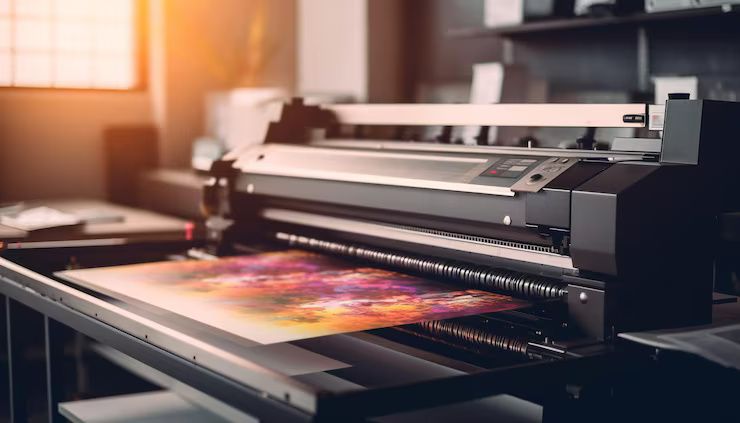
Printing machines are equipment designed to transfer text, images, graphics, or other information onto materials such as paper, cardboard, film, textiles, and specialty substrates. Traditional systems relied heavily on mechanical processes, while newer machines increasingly combine digital controls, software, sensors, and automated production features.
Offset printing remains important for many high-volume applications, while digital printing has expanded because it can handle shorter runs, variable content, and personalized materials. Hybrid systems can combine different printing methods with automated finishing and inspection.
The purpose of modern printing technology is not simply to produce an image. It is increasingly focused on accuracy, consistency, workflow integration, material efficiency, and data-based process control.
| Printing technology | Common characteristic | Emerging direction |
|---|---|---|
| Offset printing | Efficient for large volumes | Automation and process monitoring |
| Digital printing | Flexible and variable data capable | Faster production and personalization |
| Inkjet printing | Contactless ink application | Higher speed and broader substrates |
| 3D printing | Layer-by-layer object creation | Advanced materials and automation |
| Textile printing | Printing directly on fabrics | Digital textile workflows |
| Hybrid printing | Combines multiple technologies | Integrated production systems |
Importance
The future of printing machines matters because printing remains connected to many industries. Packaging, labels, books, marketing materials, industrial components, textiles, and educational materials all use different forms of printing technology.
Automation can reduce repetitive manual steps and help operators monitor production. Sensors and software can also detect changes in equipment performance, paper movement, ink application, or color consistency.
Artificial intelligence is becoming another important area. Industry research published by FESPA indicates that AI applications are being explored for prepress workflows, scheduling, color management, and personalized production.
The technology affects several groups:
- Printing equipment operators and technicians
- Packaging and publishing companies
- Graphic designers and prepress teams
- Manufacturers of printing equipment
- Educational institutions
- Businesses using printed communication
- Environmental and regulatory authorities
Another important change is the connection between printing machines and digital production systems. Cloud-based workflows can allow production information to move between design, scheduling, printing, inspection, and finishing stages.
Recent Updates
Recent developments show that the printing industry is moving toward connected, automated, and data-driven production.
AI-assisted workflows are one of the most discussed developments. AI can help analyze production information, identify patterns, support scheduling, and assist with image or document processing. However, adoption remains uneven, particularly among smaller organizations. FESPA's research covering 774 professionals across 89 countries found significant differences in the adoption of AI, automation, and sustainability practices.
Digital printing is also expanding into areas traditionally dominated by analog processes. Its ability to handle variable information and shorter production runs makes it useful for personalized packaging, labels, publishing, and promotional materials.
Automation is another major trend. Automated material handling, robotic movement, automatic registration, inline inspection, and automated finishing can reduce the number of manual steps required between different production stages.
Predictive maintenance is developing alongside machine connectivity. Sensors can collect information about temperature, vibration, operating cycles, and other conditions. Software can analyze this information to identify unusual patterns before they become major production interruptions.
Sustainability is also influencing printing machine design. Manufacturers are exploring reduced energy consumption, recyclable or recycled components, lower-waste workflows, and technologies that require fewer processing materials. Quocirca identified sustainability, AI, cloud technology, security, and hardware longevity as significant themes affecting print technology.
Security is becoming increasingly relevant because modern printers can connect to networks and store or process digital documents. Network authentication, encrypted communication, access controls, software updates, and secure document handling are therefore becoming important parts of printer management.
Post-press automation is another area of development. Cutting, folding, creasing, binding, and inspection can increasingly be connected with digital printing systems, creating more continuous production workflows.
Laws or Policies
Printing operations can be affected by environmental, workplace, waste-management, chemical-handling, electrical, and data-protection requirements. The exact requirements depend on the country, machine type, materials used, and location of the operation.
In India, environmental requirements can apply to industrial activities involving emissions, wastewater, hazardous materials, and waste. The Central Pollution Control Board publishes environmental standards and guidance under India's environmental regulatory framework. Printing-related waste can include ink residues and solvent-containing materials, depending on the production process.
Organizations should therefore consider:
- Proper handling and classification of printing waste
- Safe storage of inks, solvents, and other chemicals
- Applicable workplace safety requirements
- Electrical and machinery safety provisions
- Waste disposal and environmental documentation
- Data protection when printers process confidential documents
In other regions, energy efficiency and environmental-design rules can also influence equipment specifications. Regulations can change, so organizations should consult the applicable government authority or official regulatory publication before making compliance decisions.
Tools and Resources
Several types of resources can help people understand and evaluate printing technology.
Manufacturer technical documentation can explain machine specifications, operating principles, supported substrates, software compatibility, maintenance requirements, and environmental characteristics.
Industry organizations such as FESPA publish research and reports covering automation, AI, sustainability, and digital printing developments.
Useful resources include:
- Printing technology comparison guides
- Equipment specification sheets
- Energy-consumption calculators
- Workflow planning templates
- Color-management documentation
- Preventive-maintenance checklists
- Environmental compliance guidance
- Digital-printing industry reports
- Government environmental databases
Data from production monitoring systems can also help organizations understand machine utilization, material consumption, downtime, waste levels, and workflow performance.
FAQs
What is the future of printing machines?
The future is expected to involve greater automation, digital printing, AI-assisted workflows, connected equipment, predictive maintenance, and sustainability-focused technologies.
How is AI changing printing technology?
AI can assist with scheduling, workflow analysis, image processing, color management, predictive maintenance, and production decision-making. Its exact role depends on the equipment and software being used.
Will digital printing replace offset printing?
Not completely. Digital and offset technologies have different strengths. Digital printing is well suited to variable content and shorter runs, while offset remains important for many large-volume applications.
Why is automation important in printing?
Automation can reduce repetitive manual operations, improve consistency, connect different production stages, and provide more detailed information about machine performance.
How will sustainability affect printing machines?
Future equipment is likely to place greater emphasis on energy efficiency, reduced waste, longer equipment life, recyclable materials, and processes that reduce environmental impact.
Conclusion
The future of printing machines is moving toward intelligent, connected, automated, and more environmentally conscious production. Digital printing, AI, machine sensors, cloud workflows, and automated finishing are becoming important parts of this transformation.
Printing technology will continue to serve traditional applications while expanding into personalized production, packaging, textiles, industrial applications, and digitally connected manufacturing. The pace of adoption will vary according to technical requirements, regulations, infrastructure, and organizational readiness.
Understanding these developments can help users evaluate how printing technology is changing without assuming that one technology will replace every existing process.
As equipment becomes more connected, cybersecurity, maintenance, environmental responsibility, and data management will become increasingly important alongside print quality and production performance.