
Manufacturing assembly involves joining individual parts into a finished product or a larger subassembly.
Common assembly equipment includes screwdrivers, presses, fastening systems, conveyors, fixtures, robotic arms, inspection equipment, and material-handling systems. The right combination depends on the product, materials, production volume, and required accuracy.
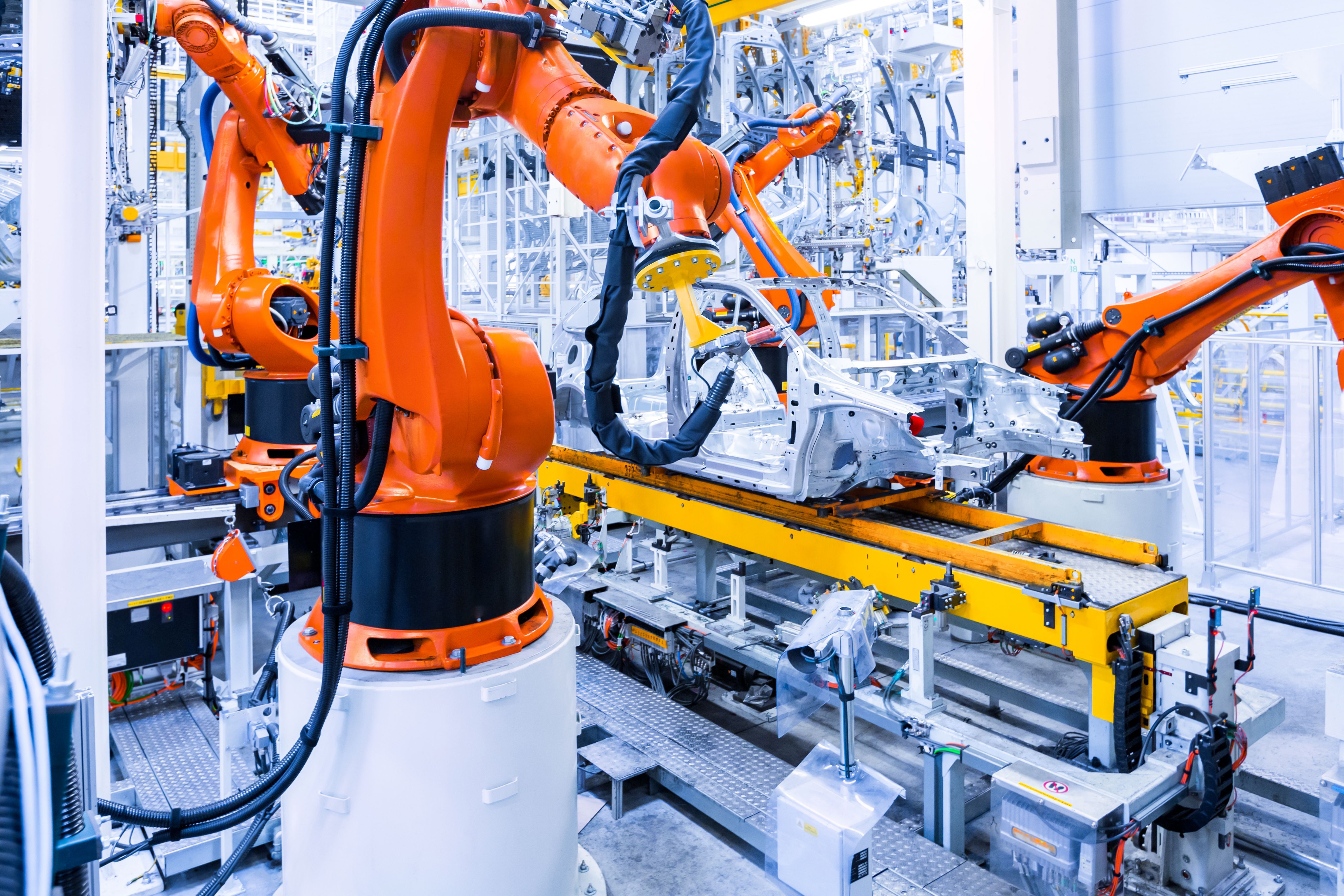
Assembly equipment can range from simple hand-operated tools to highly automated production systems. Modern manufacturing environments increasingly combine mechanical equipment, sensors, software, and robotics to improve consistency while maintaining appropriate worker-safety controls.
Context
Assembly equipment refers to machines, tools, fixtures, and supporting systems used to position, join, fasten, inspect, or move components during manufacturing. Assembly can involve operations such as fastening screws, pressing components together, inserting parts, applying adhesives, riveting, welding, or checking dimensions.
The equipment selected for an assembly process normally depends on several factors:
- Component size and material
- Required joining method
- Production volume
- Required accuracy and repeatability
- Product design
- Operator involvement
- Workplace safety requirements
Common assembly equipment can be grouped into several categories.
| Equipment type | Typical application | Common characteristics |
|---|---|---|
| Assembly fixtures | Holding components in position | Repeatable positioning |
| Pneumatic tools | Fastening and joining | Uses compressed air |
| Electric screwdrivers | Screw fastening | Controlled torque |
| Press machines | Press fitting components | Mechanical or hydraulic force |
| Riveting equipment | Permanent fastening | Joins overlapping parts |
| Conveyors | Moving assemblies | Supports production flow |
| Robotic systems | Repetitive assembly tasks | Programmable operation |
| Vision systems | Inspection and verification | Camera-based checking |
| Torque controllers | Fastener monitoring | Measures applied torque |
Fixtures are particularly important because they hold parts in the correct position while an assembly operation takes place. Presses are frequently used when one component must be inserted into another with controlled force.
Fastening equipment includes manual, pneumatic, and electrically powered tools. Electric systems can incorporate electronic torque monitoring, while pneumatic tools are widely used in repetitive industrial operations.
Conveyors and automated material-handling systems help transfer parts between assembly stages. Their design can vary from simple belt conveyors to systems integrated with sensors, robots, and programmable controls.
Importance
Assembly equipment affects production consistency, worker interaction, product quality, and the overall organization of a manufacturing line. Poorly designed assembly processes can create positioning errors, inconsistent fastening, unnecessary handling, and additional inspection requirements.
Equipment also influences how much manual activity is required. A basic assembly station may use fixtures and hand tools, while a highly automated line can combine robots, sensors, conveyors, fastening systems, and computerized controls.
Robotic assembly equipment is increasingly used for repetitive operations. According to the International Federation of Robotics, 542,000 industrial robots were installed worldwide in 2024, more than twice the number installed ten years earlier. India recorded 9,100 industrial robot installations in 2024, with the automotive industry representing the largest share.
The people affected by assembly equipment include:
- Production operators
- Maintenance personnel
- Manufacturing engineers
- Quality-control teams
- Equipment designers
- Workplace-safety personnel
Ergonomics is another important consideration. Equipment can be arranged to reduce excessive reaching, awkward postures, repetitive strain, and unnecessary manual handling. Proper workstation design can therefore be relevant to both productivity and worker well-being.
Recent Updates
Assembly equipment is increasingly connected to digital controls and automated inspection. Sensors can monitor torque, position, force, temperature, vibration, and other process conditions. Data from these sensors can be used to identify deviations during production.
Robotics is also developing beyond conventional fixed automation. Collaborative robots, commonly called cobots, are designed for applications where people and robots may work in the same production environment, subject to an appropriate safety assessment. The International Federation of Robotics reported that cobots represented 10.5% of industrial robots installed worldwide in 2023.
Artificial intelligence and machine vision are additional areas of development. Vision-equipped systems can help identify part orientation, detect visible defects, and guide robotic operations. IFR identified AI, machine vision, energy efficiency, and collaborative robotics among significant robotics trends for manufacturing.
Other developments include:
- Digital monitoring of assembly processes
- Automated torque verification
- Machine-vision inspection
- Flexible robotic cells
- Digital twins for process analysis
- Energy-efficient motors and drives
- Improved sensor integration
These technologies do not eliminate the need for engineering review. Automated equipment still requires appropriate configuration, maintenance, validation, and safety assessment.
Laws or Policies
Assembly equipment is subject to workplace-safety and machinery requirements that vary by country and application. Manufacturers and equipment users should identify the rules that apply to their specific facility and machinery.
In the United States, OSHA's general industry machinery requirements include 29 CFR 1910.212, which addresses machine guarding. Machines presenting hazards must have appropriate safeguarding to protect operators and other employees. OSHA also addresses hazardous-energy control, commonly known as lockout/tagout, under 29 CFR 1910.147.
OSHA identifies hazards associated with rotating parts, nip points, flying particles, and points of operation. Guards can include fixed, interlocked, adjustable, and self-adjusting designs depending on the application.
For machinery placed on the European market, the EU Machinery Regulation 2023/1230 is an important regulatory framework. The regulation entered into force in 2023 and is scheduled to apply from January 20, 2027, with certain provisions applying earlier.
ISO 12100 provides a widely referenced framework for machinery risk assessment and risk reduction. It covers principles for identifying hazards, evaluating risks, and reducing those risks through appropriate design measures.
Because regulations differ by jurisdiction, assembly equipment should be reviewed against applicable national laws, industry-specific requirements, electrical rules, guarding requirements, and machinery standards.
Tools and Resources
Several technical resources can help people understand assembly equipment and machinery safety.
OSHA provides machine-guarding guidance, regulatory information, and educational material for workplaces in the United States. Its machine-guarding resources cover safeguarding, point-of-operation hazards, maintenance considerations, and related requirements.
The International Federation of Robotics provides statistics and research on industrial robotics, including installation data, robot density, collaborative robots, and automation trends. Its World Robotics 2025 information is useful for understanding current industrial-robot adoption.
Useful resources include:
- OSHA machinery-safety guidance
- ISO machinery-safety standards
- International Federation of Robotics publications
- Manufacturer technical manuals
- Equipment maintenance records
- Risk-assessment worksheets
- Assembly process documentation
- Torque and measurement records
Digital maintenance-management and production-monitoring platforms can also help organizations record inspections, equipment status, maintenance activities, and process measurements.
FAQs
What is assembly equipment?
Assembly equipment includes tools, machines, fixtures, and automated systems used to position, join, fasten, inspect, or move components during manufacturing.
What are common types of assembly equipment?
Common examples include assembly fixtures, presses, electric screwdrivers, pneumatic tools, riveting systems, conveyors, robotic arms, vision systems, and torque-control equipment.
Why are assembly fixtures important?
Fixtures hold components in a defined position during assembly. This helps maintain repeatable alignment and can make repetitive assembly operations more consistent.
Are robots used for assembly?
Yes. Industrial robots and collaborative robots are used for tasks such as part handling, fastening, dispensing, inspection, and component placement. The suitability of a robot depends on the application and required safety controls.
What safety requirements apply to assembly equipment?
Requirements depend on the country, machinery, workplace, and application. They can include machine guarding, hazardous-energy control, electrical safety, risk assessment, operator training, and appropriate protective measures.
Conclusion
Common assembly equipment ranges from basic fixtures and hand-operated tools to automated presses, conveyors, robotic systems, and machine-vision equipment. Each type has a specific role in positioning, joining, handling, or verifying components.
Modern assembly systems increasingly combine mechanical equipment with sensors, software, robotics, and automated inspection. Safe equipment selection, appropriate risk assessment, regular maintenance, and compliance with applicable regulations remain essential parts of a reliable manufacturing environment.
As manufacturing processes become more connected, assembly equipment is likely to place greater emphasis on data collection, flexible automation, robotics, and process verification. These developments can support more consistent production while keeping safety and engineering controls central to equipment design and operation.