
Artificial intelligence (AI) machines are changing how modern manufacturing facilities monitor equipment, manage production processes, inspect products, and analyze operational data.
By combining AI software with sensors, robotics, computer vision, and industrial control systems, manufacturers can make production environments more responsive and data-driven.
AI machines in manufacturing can perform tasks that traditionally required repeated human observation or manual analysis. Their applications range from detecting production defects to predicting equipment problems and adjusting processes according to changing conditions. Understanding these technologies helps explain their growing role across different manufacturing industries.
Context
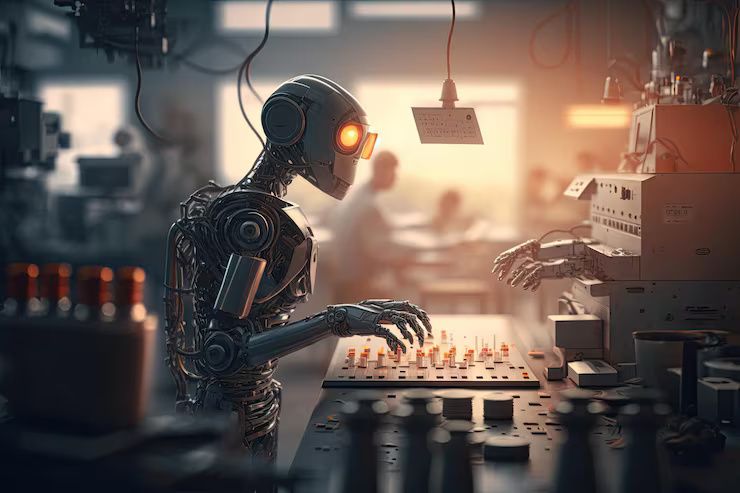
AI machines in manufacturing are industrial systems that use artificial intelligence techniques to interpret data, recognize patterns, make predictions, or support automated decisions. They may include robotic systems, machine-vision equipment, predictive-maintenance platforms, autonomous mobile robots, and AI-enabled production-control systems.
The development of industrial AI has been supported by improvements in computing power, sensors, connectivity, cloud platforms, and machine-learning methods. Earlier automated equipment generally followed predefined instructions. AI-enabled systems can analyze larger amounts of information and respond to patterns that may not have been explicitly programmed.
Common AI technologies used in manufacturing include:
- Machine learning for pattern recognition and prediction
- Computer vision for inspection and identification
- Robotics for repetitive physical tasks
- Natural-language interfaces for interacting with industrial data
- Digital twins for modeling and analyzing production environments
- Edge computing for processing information close to equipment
The main purpose is to improve monitoring, consistency, production planning, equipment analysis, and decision-making while maintaining appropriate human oversight.
| AI application | Typical manufacturing use |
|---|---|
| Computer vision | Product and process inspection |
| Predictive analytics | Equipment condition monitoring |
| Industrial robotics | Repetitive material handling |
| Digital twins | Process simulation and analysis |
| Machine learning | Pattern detection and forecasting |
| Edge AI | Rapid analysis near production equipment |
Importance
AI machines matter because manufacturing processes generate large quantities of information from machines, sensors, production systems, and quality checks. AI can help organize and analyze this information more efficiently than conventional manual analysis.
One important application is predictive maintenance. Instead of relying only on fixed maintenance schedules, machine-learning models can examine information such as vibration, temperature, pressure, or operating cycles to identify patterns associated with equipment deterioration.
Computer vision is another significant area. Cameras combined with AI models can examine products or components for visible irregularities. These systems can support quality-control teams by identifying patterns consistently across large production volumes.
AI also affects manufacturing workers and managers. Operators may interact with AI-enabled equipment, while engineers and managers can use analytical information to understand production conditions. Human expertise remains important because AI outputs require appropriate interpretation, validation, and operational controls.
AI can affect several groups, including:
- Production engineers
- Equipment operators
- Quality-control teams
- Maintenance personnel
- Plant managers
- Safety and compliance teams
- Technology and data specialists
The impact varies according to the industry, production process, level of automation, and quality of available data.
Recent Updates
Recent developments in industrial AI have focused on combining artificial intelligence with robotics, industrial Internet of Things systems, edge computing, and digital twins. These technologies allow manufacturing facilities to connect physical equipment with analytical software.
A major trend is the increased use of edge AI. Instead of sending every piece of information to a remote system, some processing can occur near the machine. This can reduce communication delays and support applications where rapid responses are important.
Generative AI is also being explored for manufacturing-related tasks. Potential applications include natural-language access to technical information, analysis of maintenance records, assistance with documentation, and interaction with industrial databases. However, these applications require careful controls because inaccurate information can affect operational decisions.
Another development is the use of digital twins. A digital twin represents aspects of a physical asset or process in a digital environment. When connected with operational data, it can help engineers study process behavior, evaluate scenarios, and identify potential improvements.
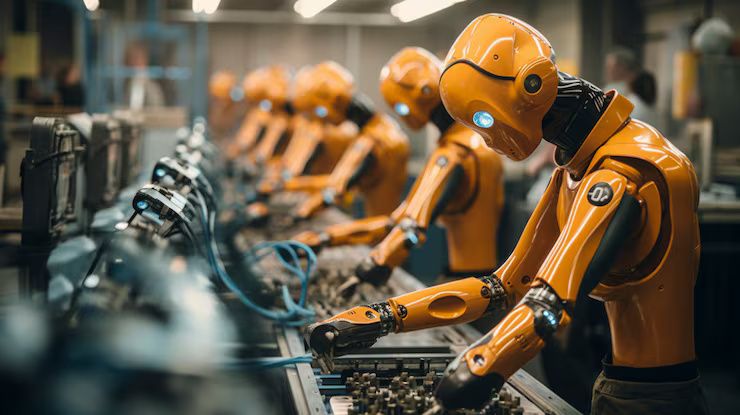
AI-enabled robotics are also becoming more capable of handling variable environments. Vision systems and machine-learning models can help robots identify objects or adapt to changing conditions rather than relying entirely on fixed movements.
Laws or Policies
AI machines used in manufacturing may be affected by several categories of laws and standards. The exact requirements depend on the country, industry, equipment, workplace conditions, and intended application.
In the European Union, the EU AI Act establishes a risk-based framework for artificial intelligence. Certain AI applications can face additional requirements depending on their classification and use.
Industrial equipment may also need to comply with machinery, electrical, electromagnetic compatibility, workplace safety, and product-specific requirements. Organizations operating connected industrial systems should additionally consider cybersecurity and data-protection obligations.
In the United States, workplace safety requirements can apply to industrial machinery and automated systems. Relevant federal, state, and industry requirements may differ according to the workplace and equipment.
International standards can also provide guidance for industrial automation, functional safety, robotics, cybersecurity, and AI governance. Examples include standards developed by ISO and IEC.
Organizations should evaluate:
- Machine and workplace safety requirements
- Cybersecurity controls
- Data governance practices
- Human oversight procedures
- Equipment documentation
- Applicable industry standards
- Regional AI regulations
Because regulations change and requirements vary by application, organizations should consult current official regulatory sources and qualified compliance professionals for specific situations.
Tools and Resources
Several categories of tools can help people understand and evaluate AI machines in manufacturing. Government agencies, standards organizations, research institutions, and technology documentation can provide useful background information.
Useful resources include:
- ISO and IEC publications covering industrial automation and safety
- Government workplace-safety authorities
- National AI policy and regulatory portals
- Industrial IoT documentation
- Machine-learning documentation and educational resources
- Digital-twin research and technical publications
- Manufacturing research institutes
- Cybersecurity frameworks for industrial control systems
For organizations evaluating AI systems, a structured assessment can consider the available data, system accuracy, cybersecurity, safety implications, integration requirements, maintenance procedures, and human oversight.
FAQs
What are AI machines in manufacturing?
AI machines are industrial systems that use artificial intelligence to analyze information, recognize patterns, make predictions, or support automated processes. Examples include vision inspection systems, predictive-maintenance platforms, and AI-enabled robots.
How is AI used in manufacturing?
AI is commonly used for quality inspection, predictive maintenance, production monitoring, process analysis, robotics, demand forecasting, and anomaly detection.
Does AI replace human workers in manufacturing?
AI can automate or assist with particular tasks, but manufacturing still requires human judgment, supervision, technical knowledge, maintenance, safety management, and decision-making. The effect of AI varies considerably between industries and individual facilities.
What data do manufacturing AI systems use?
Depending on the application, systems may use sensor readings, images, machine conditions, production records, temperature measurements, vibration data, process parameters, and historical maintenance information.
What are the main challenges of industrial AI?
Important challenges include data quality, cybersecurity, system integration, model reliability, technical expertise, safety considerations, regulatory requirements, and the need for ongoing monitoring.
Conclusion
AI machines are becoming an important part of modern manufacturing by combining artificial intelligence with robotics, sensors, computer vision, analytics, and connected industrial systems. Their applications include equipment monitoring, quality inspection, process analysis, and production support.
The effective use of industrial AI depends on reliable data, appropriate technical design, safety controls, cybersecurity, and human oversight. As AI technologies continue to develop, manufacturers will need to evaluate both their practical capabilities and the regulatory responsibilities associated with their use.
Understanding the technology is useful for engineers, operators, managers, researchers, and anyone interested in the future of industrial production.
The broader direction of manufacturing is toward increasingly connected and data-driven environments, where AI works alongside established automation technologies rather than operating independently.